About Kristian von Sponneck
Trauma Counsellor, Psychotherapist, Hypnotist, Trainer and Author
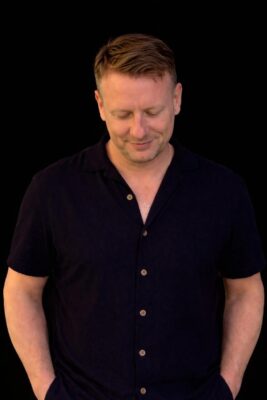 I’m Kristian von Sponneck, a former practising psychotherapist, trauma counsellor, one of the most experienced Hypnotists in the UK, and the author of the forthcoming book The Forever Victim: Narcissist 101.
My professional background has centered around human behaviour, trauma, emotional responses, belief systems, communication and the ways people adapt to difficult or damaging experiences.
Over the years, my work has involved helping people better understand themselves, their reactions, their relationships and the patterns that can develop following trauma, anxiety, emotional distress and major life changes.
My interest has always gone beyond simply asking what somebody is doing.
I want to understand why they are doing it, what sits underneath the behaviour, and how those patterns affect the people around them.
That approach is central to the way I am writing The Forever Victim: Narcissist 101.
My Professional Training
My training spans psychotherapy, trauma counselling, clinical hypnotherapy, Neuro-Linguistic Programming, strategic therapy approaches, coaching and the wider study of human behaviour.
DCH – Doctor of Clinical Hypnotherapy
I was awarded the DCH (Doctor of Clinical Hypnotherapy) through the American Institute of Hypnotherapy (AIH) in June 2006* (please see bottom of page for further details).
My doctoral thesis was titled:
“Hypnosis in the Medical Field – a Historical Study”
The thesis explored the historical development and use of hypnosis within medical settings and formed an important part of my wider interest in the relationship between the mind, behaviour, suggestion and human response.
The thesis can be viewed here.
Neuro-Linguistic Programming
I am a Licensed Master Practitioner of Neuro-Linguistic Programming (NLP), trained and certified by co-creator Richard Bandler in 2006.
I also hold the qualification of Licensed Practitioner of Neuro-Linguistic Programming (NLP), also certified by Richard Bandler.
NLP examines the relationship between language, thought, perception and behaviour, and how patterns of thinking and communication can influence emotional responses and decision-making.
That training has remained particularly relevant throughout my work because destructive relationships are often heavily influenced by language, interpretation, suggestion, emotional triggers and repeated behavioural patterns.
Hypnotherapy and Clinical Hypnosis Qualifications
My wider hypnosis and hypnotherapy training includes:
Diploma in Hypnotherapy (Dip.Hyp) – Dr. Keith Hearne, European College of Hypnotherapy
Diploma in Past Life Therapy (Dip.PLT) – Dr. Keith Hearne, European College of Hypnotherapy
Diploma in Clinical Hypnosis (DCHyp) – Brief Strategic Foundation / BST Foundation
Certificate in Clinical Hypnosis – Brief Strategic Therapy Foundation / BST Foundation
Senior Qualification in Hypnotherapy Practice (SQHP) – General Hypnotherapy Standards Council
These qualifications formed part of my broader development in hypnosis, therapeutic communication and the study of human responses, beliefs and behavioural patterns.
Specialist Hypnosis and Therapeutic Training
Alongside my core qualifications, I have completed a range of specialist hypnosis and therapeutic training programmes covering areas such as pain and migraine work, smoking cessation, childbirth, weight management, infertility, stage hypnosis and coaching.
These include:
Migraine Resolution Program (MRP) Practitioner – Inspiration Hypnotherapy, 2006
Hypnotherapy for Weight Loss – Austin Corporate, 2005
Hypnosis for Childbirth – Mindtech Productions, 2006
Hypno-Genetics / Unconscious Influences in Infertility – Dr. Keith Hearne, European College of Hypnotherapy, 2006
Kick Smoking – Inspiration Hypnotherapy, 2006
Certificate in Smoking Cessation – 4 Corners Hypnosis, 2011
Certificate in the Marketing of Hypnosis – 4 Corners Hypnosis, 2011
Learn Stage Hypnosis – NLP NOW, Phillip Holt, 2004
Certificate in Personal Coaching – The Coaching Academy, 2014
This specialist training broadened my understanding of how hypnosis, communication and behavioural methods can be adapted to different goals, emotional responses and individual circumstances.
Institute of Professional Psychologists
I was invited into the Institute of Professional Psychologists, with membership number IPP 7019.
My admission followed recognition connected with my DCH thesis and professional work.
This represented another stage in the development of my work and continuing interest in psychology, human behaviour and therapeutic approaches.
Other Related Training
Alongside my hypnosis and NLP qualifications, I also hold:
Diploma in Psychotherapy
Diploma in Trauma Counselling
These areas of training have been particularly important in shaping the way I look at emotional responses, trauma, relationship dynamics and the longer-term effects of distressing experiences.
Psychotherapy and Trauma Counselling
My professional background includes working as a qualified psychotherapist and counsellor, with a particular interest and training in trauma.
I worked within psychotherapy and counselling from 2005 until the Covid period, with much of my work focused on areas including trauma, anxiety, grief, identity, emotional distress, relationship difficulties and major life transitions.
Trauma has always interested me because its effects are rarely confined to one moment in time.
A person can experience something devastating and continue functioning outwardly while carrying the emotional consequences into future relationships, decisions and patterns of behaviour.
That does not mean trauma excuses abusive behaviour.
It does mean that understanding trauma can help us understand where certain behaviours may have originated, how they became reinforced and why somebody may repeat them.
This distinction between understanding and excusing is a recurring theme throughout my work.
More Than Twenty Years Working With the Mind
I have also spent more than two decades working professionally with hypnosis.
Hypnosis has given me another perspective on how people form beliefs, respond emotionally, develop automatic patterns and interpret the world around them.
Our behaviour is not always the result of conscious reasoning.
Much of what we do can be influenced by conditioning, earlier experience, assumptions, fears, expectations and deeply embedded beliefs.
This becomes particularly relevant when looking at controlling relationships.
A person may know intellectually that an accusation is unreasonable, yet still begin defending themselves.
They may know they have done nothing wrong, yet find themselves constantly explaining.
They may recognise manipulation, yet still feel compelled to reassure.
Understanding these processes can help explain why intelligent, independent people can sometimes find themselves caught in emotionally destructive dynamics.
Why I Am Writing About Narcissism
I did not decide to write about narcissism simply because it has become a fashionable subject online.
In fact, one of the reasons I wanted to write The Forever Victim: Narcissist 101 is because I believe the subject has become heavily diluted by social media.
Today, almost any unpleasant behaviour can be labelled “narcissistic”.
An ex-partner lies: narcissist.
Somebody becomes angry: narcissist.
A person stops replying: narcissistic silent treatment.
Someone behaves selfishly: narcissist.
That is far too simplistic.
Narcissistic traits exist on a spectrum, and many people display them at different points in their lives without having a personality disorder.
Pathological narcissism is considerably more complex.
My aim is to explore that complexity while also explaining the terminology that has grown around narcissistic relationships.
Gaslighting.
Flying monkeys.
Smear campaigns.
Reactive abuse.
Projection.
Blame shifting.
Silent treatment.
Hoovering.
Triangulation.
Control.
Victim positioning.
These terms have become part of everyday language, but they are often used without context.
My book looks beyond the label and asks what is actually happening within the interaction.
Personal Experience Changed My Perspective
My professional training gave me one understanding of trauma and human behaviour.
Personal experience gave me another.
I describe myself as a resistive narcissism survivor.
That is not a recognised clinical diagnosis or psychological classification. It is my own description of the position I found myself in.
I experienced behaviour that followed many of the patterns commonly associated with narcissistic abuse, but I did not simply accept the reality being presented to me.
I questioned it.
I resisted it.
I recognised contradictions.
I challenged accusations.
I stopped reacting in the ways that appeared to be expected.
And that produced its own fascinating dynamic.
When one method of control failed, another appeared.
When provocation failed to produce the desired reaction, the pressure could increase.
When explanations stopped, accusations could change.
When silence replaced argument, that silence itself could become provocative.
It gave me a very different perspective on what happens when somebody refuses to play the role they have been assigned.
That experience forms part of the foundation of The Forever Victim: Narcissist 101.
Professional Knowledge and Lived Experience
There is an enormous difference between reading about a behavioural pattern and experiencing it.
You can understand gaslighting academically.
You can understand projection intellectually.
You can explain reactive abuse in a consultation room.
But when you experience those dynamics personally, the emotional reality becomes much clearer.
That is why my approach combines professional knowledge with lived experience.
I am not interested in presenting every difficult person as a narcissist.
I am not interested in encouraging people to diagnose their partners.
And I am certainly not interested in creating another sensationalised account of narcissism.
I am interested in patterns.
What happens repeatedly?
What causes the conflict?
Who takes responsibility?
How does somebody respond when challenged?
What happens when control is lost?
What happens when the other person stops defending themselves?
And perhaps most importantly:
What happens when somebody finally sees the pattern for what it is?
Professional Indemnity Insurance
For my professional therapeutic work, I have held £2,000,000 professional indemnity insurance through Towergate / SMG Professional Risks.
The Forever Victim: Narcissist 101
My forthcoming book, The Forever Victim: Narcissist 101, brings together my professional background, my study of human behaviour and my personal experience.
It explores the difference between ordinary narcissistic traits and pathological narcissism, while examining the behaviours and terminology surrounding emotionally destructive relationships.
It also looks closely at something that is often overlooked:
The person reacting to the behaviour.
Because sometimes the final reaction becomes the entire story while everything that came before it is conveniently forgotten.
Understanding narcissism properly requires more than simply identifying the loudest moment.
It requires understanding the entire pattern.
And that is exactly what The Forever Victim: Narcissist 101 sets out to do.
* Please note, I am not a General Practitioner or Medical Doctor. The American Institute of Hypnotherapy (AIH) Doctorate was approved by the California Bureau for private post-secondary & vocational education. Therefore, the degree is ‘approved’ and not ‘accredited’ and is (as of the time of writing) the 2nd most in-depth qualification worldwide in Clinical Hypnotherapy. There are practitioners in the UK, Australia, worldwide (especially America) that use the title ‘Dr.’ with this qualification. I do not use this title. The DCH from the AIH which I hold is not to be confused with other Doctor of Clinical Hypnotherapy qualifications offered on the internet.